Small Reminder in Servant Leadership: Sometimes It’s Just a Yellow Tomato
A short seasonal reflection on the small things that help great cultures thrive
As summer is in full swing, I’ve been thinking about how easily we can jump to conclusions when people don’t respond, communicate, or behave the way we expect.
Sometimes the most helpful thing we can do as servant-leaders is slow down, become curious, and make sure we truly understand what we’re seeing before we react.
An experience on our balcony garden reminded me of this lesson in a humorous and memorable way.
Gardening 25 Floors Up in the Sky
I love homegrown tomatoes, green beans, and squash. During the summer, we’re always on the lookout for a roadside stand or farmers market to bring home the freshest bounty.
You might think, “Why don’t you just grow your own garden?” Great idea—if you live on the ground.
My partner and I live 25 floors up in the sky but we do have a small 7×7 balcony. So last spring, I decided to try my hand at high-rise gardening.
I researched. I planned. I dreamed.
Armed with two five-gallon Lowe’s buckets, vegetable trellises, a couple bags of potting soil, Kentucky Wonder bean seeds, and three tomato plants, I was ready. Ninety-two dollars later, my balcony farm was officially in business.
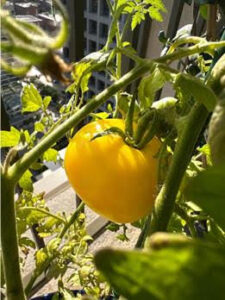
The beans sprouted quickly and began climbing their trellis with impressive determination. The tomato plants looked healthy, too. Soon I had one green tomato.
Then I waited.
And waited.
The tomato grew larger and larger but never turned red. Every morning, I would check on it. Still yellow.
I wondered if it needed more water. More sun. More fertilizer. More patience. I studied it. I monitored it. I may have even offered a few encouraging words but nothing changed.
Finally, I picked up the plant tag and discovered the problem. I purchased yellow tomatoes!
The tomato wasn’t confused. I was.
As I stood there laughing at myself, I realized something: The tomato plant had actually been communicating with me the entire time.
Every day it was telling me exactly what it was yet I simply wasn’t listening.
Instead, I was interpreting everything through my own expectations and had decided what success should look like.
I expected red tomatoes, so every yellow tomato appeared to be a problem that needed fixing.
That’s where the gardening lesson turned into a people lesson.
Sometimes It’s Just a Yellow Tomato
When we don’t understand someone’s behavior, our first instinct is often to fix it. Servant-leaders begin with curiosity instead.
How often do we do the same thing in our work and relationships?
Someone communicates differently than we do or a teammate approaches a challenge from a different angle. Someone wants a relational conversation while we’re focused on efficiency and getting the task completed. Or someone wants quick answers while we’re looking to connect first.
Without realizing it, we can begin solving the wrong problem.
We assume someone is…
- Disengaged when they may simply be processing.
- Resistant when they may just need more information.
- Careless when they may care deeply but express it differently than we do.
The task-oriented side of us immediately asks, “How do I fix this?”
The relational side asks a different question: “How are you, what’s going on?”
Sometimes the most servant-minded thing we can do is pause our assumptions long enough to become curious.
Becoming Curious
In a recent discussion about relational and task-oriented communication, I explored the importance of understanding what another person needs before deciding how to respond. And equally important—what is most needed in the moment.
Curiosity often reveals things that efficiency alone cannot.
Servant-leaders pause long enough to understand before they act. Curiosity often solves problems that assumptions create.
 My little balcony garden certainly didn’t produce enough vegetables to feed the neighborhood. In fact, after months of planning, watering, fertilizing, and cheering from 25 floors up, the grand harvest amounted to one yellow tomato and one green bean.
Not one bucket of beans. One green bean.
At first, that seemed almost laughable. But over time I’ve discovered that some of life’s most meaningful lessons arrive in surprisingly small packages.
As it turns out, that lone green bean would eventually inspire a story of its own—one involving a grasshopper, a children’s book, and an unexpected lesson about seeing the world through someone else’s eyes. But that’s a story for another day.
Before we jump to conclusions, before we assume something is broken, before we rush into problem-solving mode, it may be worth taking another look.
Because sometimes what appears to be a problem isn’t a problem at all.
Sometimes it’s just a yellow tomato.
Written by Duane Trammell. Duane is the founding partner, president, and COO of Trammell McGee-Cooper and Associates (TMCA) and lives with his partner, Steven, in Dallas, TX.